
Rethink Culture to Drive Successful Transformations
Rethink Culture to Drive Successful Transformations
December 2025

Read article


December 2025
I explore the topic of culture with a clear intention: to show why culture is not an HR accessory but the underlying architecture that determines whether transformations succeed or fail.
I’m launching this series of articles because I see, again and again, how culture is simplified—or even ignored—in organisational transformation projects.
Before talking about organisations, mergers, or transformation projects, it’s worth taking a step back.
Every culture—whether societal or organisational—first takes shape in our relationship with the Other. Not “the other” as a simple difference or identity, but the Other as a space of gap, encounter, and possibility. This nuance makes all the difference when applied to organisations.
I draw on the work of philosophers and sociologists such as S. Hall, C. Geertz and M. de Certeau: culture is never a fixed identity nor a set of roots that remain unchanged. It is a living field of resources, practices, and meanings—one that only comes alive when it meets something else, when it is set into motion through encounter.
“Man is an animal suspended in webs of significance he himself has spun,” wrote Clifford Geertz. These webs are constantly shifting, co-created through human activity. We rely on them, but we also reshape them continuously.

Thinking of culture as an identity is a dead end. Culture is never static: it transforms, adapts, renews itself. Imagining a single, fixed “cultural identity”—in Europe or elsewhere—leads to dangerous simplifications.
It is far more fruitful to see culture as a set of living, evolving resources. There is indeed a foundation we can rely on, but it is always in movement. This is why it is inaccurate to treat culture as something fixed or immutable within organisations.
If we analyse culture only through the lens of difference, we create oppositions: us vs. them, our way vs. theirs. Difference creates distance and blocks cooperation.
Seeing culture as a dynamic process, by contrast, allows us to co-create rather than compare or oppose.
The metaphor of roots freezes culture in a defensive, identity-based logic. What no longer moves begins to wither. A living culture is one that transforms, expands, and opens itself.
I draw inspiration from François Jullien, a philosopher I had the chance to meet at the Solvay Brussels School of Management. His invitation is to move away from the logic of difference and toward the logic of the gap: a space between two worlds that doesn’t separate but instead opens. It is in this “in-between” — in the tension, the encounter, the circulation — that something shared can emerge and take shape.
Rather than freezing corporate cultures into opposing blocks, it is often more fruitful to observe the gaps between them — those small shifts that reveal how each one operates, without judgment. Take, for example, an organisation that is very process-driven and another that is strongly client-oriented: from afar, one might oppose rigidity and flexibility.
But if we look at the gap, we can see that, in the first case, the process serves as a support to ensure quality, while in the second, the relationship with the client becomes the neutral base from which everything else can adapt.
The same applies to an “engineering-first” culture versus a “sales-first” culture: the point is not to oppose technical rigour and commercial dynamism, but to notice that one builds value through robustness, while the other builds it through traction and rapid learning.
Observing these gaps opens a space for mutual understanding and adjustment, far richer than simplistic oppositions.
The gap does not confine anyone; it opens a space to discover the other — and, at the same time, to better understand oneself.
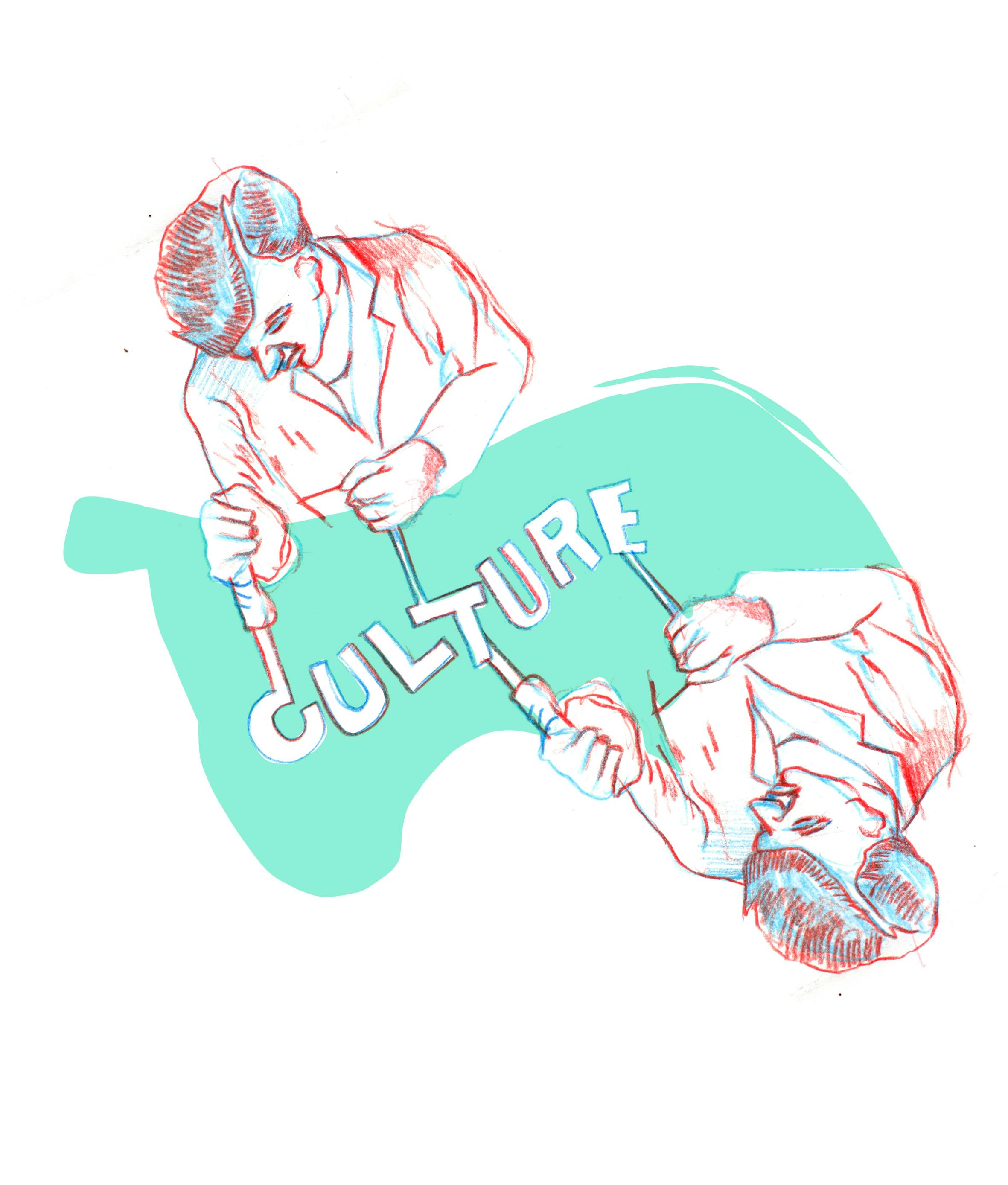
What is common does not exist from the start: it is built through encounter and dialogue. Greek democracy was born this way — from one discourse confronted with another. It is not one against the other, but one with the other, in a space that allows for adjustment and understanding.
The gap is the distance that enables us to see the other without absorbing them into our own frames. It is in this “in-between” that genuine dialogue can emerge.
In dialogue, it is far more fruitful to see cultures as resources that add to and enrich one another, rather than as values that oppose each other.
It is no longer about defending a position or imposing a norm, but about expanding the field of possibilities. Thinking in terms of resources opens the space: each perspective becomes a useful contribution — an addition rather than an obstacle to work around.
This shift creates a dialogue that is more alive, more creative, and ultimately more mature — a dialogue that helps us grow rather than divide.
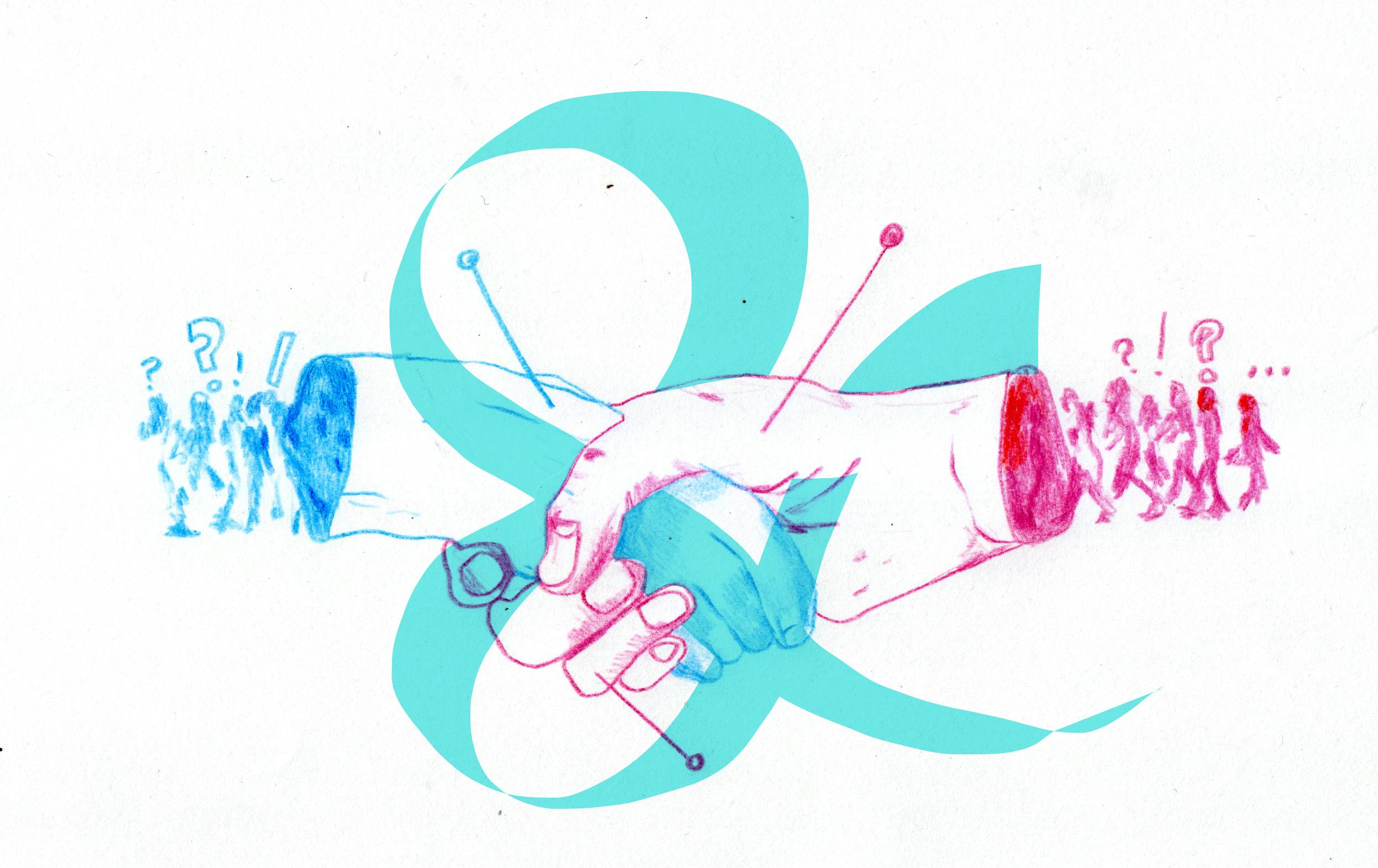
I recently spoke with an HR director involved in several acquisition deals. He explained that, in some cases, the goal was not to “integrate” the acquired company’s culture. The focus, he said, was simply to take over the activity, and employees would “adapt to our model.”
But this viewpoint exposes its own limits: even when we believe we are not integrating the other culture, it inevitably enters the system. People never arrive alone—they bring habits, ways of deciding, communicating, collaborating, solving problems. They bring cultural resources, whether we like it or not.
Even in a logic of cultural imposition, the encounter still happens. And as soon as two groups need to work together, one essential question arises: How do we work together?
We can refuse to open the conversation, but we cannot prevent the other culture from appearing in daily practices.
This is why listening, dialogue, and clarification are essential—not to “merge” two cultures, but to make co-action possible.
Culture does not disappear by decree. It transforms, circulates, confronts, and adjusts. And the sooner an organisation accepts this reality, the smoother and more constructive the integration becomes—even when it aims to preserve a dominant culture.
To understand how the gap allows us to think of culture as something other than an opposition, let's take a concrete case of the transformation of a company that needs to equip itself with more formalism and a framework in order to grow and take on a more European dimension.
The Culture Transformation Project begins with one simple question:
The goal is not to erase the old, but to identify what constitutes the useful DNA — the resources that we can rely on to evolve.
This company has a very strong initial culture, very autonomous, very collaborative. For ten years, this DNA has created an exceptional cohesion: open feedback, initiative, high trust, high agility – exactly the strengths that employees list first in the "cultural heritage" part of the questionnaire. This culture works very well... as long as the environment remains stable and the company remains "small".
Then the organization grew, opened up to multi-sites, welcomed a new CEO, and became more and more integrated into a larger group. New needs are emerging: more clarity in roles, more coordination, common tools, more explicit governance, increased permeability between entities. In other words: the environment is changing and calling for a new cultural layer.
This movement does not deny the old DNA: it complements it.
In interviews, this is very clear: the teams say they want to preserve collaboration, feedback, relational maturity, etc. But they also recognize the limits of a model that has become too autonomous, sometimes isolated, impermeable, cut off from certain information flows. They warn: "our strength becomes counterproductive if we do not adjust it to the new context".
The gap is precisely there:
It is therefore not an opposition between "old" and "new", but a work of superimposition: a culture that keeps its heart, but that changes in thickness. The company adds layers — more structure, more permeability, more multi-site consistency — while maintaining the spirit that made it successful.
In this space of distance, one thing becomes possible: to reinvent oneself without denying oneself. We are not "correcting" the old model: we are expanding it. We do not "replace" a cultural identity: we make it more capable of accommodating complexity.
This transformation process must be monitored with a compass:
- identify what must remain (strengths, lived values, practices that work),- identify what must evolve (areas of tension, market needs, expectations of the new leadership),- create a common future that is neither a copy of the past nor the projection of an imposed culture, but a living assembly of complementary resources.
The HR Director closes with this metaphor: "the culture of our company is like a garden to be cultivated: you have to sow, water, adjust the internal environment to see the growth and flowering".
This case study illustrates the desire to co-create a new unit by dealing with a balanced mix between past and future, to support competitiveness, innovation and collective commitment.
This example clearly shows the power of the notion of gap: it is not a question of choosing between two cultures, but of inhabiting the space between them in order to create something else — something that did not yet exist, and that can only emerge in the encounter.
Seeing culture as a living process helps us move beyond confrontation. Cultural richness emerges from the ability to evolve together, to turn the gap into a space of creation, and to build something shared without denying differences.
On a more personal level, encounter is just as essential.
Meeting someone unsettles us—it cracks open the “self,” challenges certainties, reveals vulnerabilities. The risk is always assimilation: reducing the other to what we already know. True encounter, however, allows something genuinely new to emerge in the space between us.
Sociology adds another layer. The way we feel, express ourselves, decide, or react to others is deeply shaped by the culture in which we grew up. Every culture transmits “prototypes of feeling” (R. Benedict) and implicit behavioural norms. We need a sideways step to see the patterns that shape us.
Culture is never only “outside.” It is in our relationships, emotions, automatisms, blind spots—and in the way we meet the Other.
Seeking a single identity or opposing two cultures creates tensions and resistance.
Working with the gap—the zones of encounter and transformation—makes integration easier and allows new dynamics to emerge.
This starting point is essential in understanding organisations. What we call “corporate culture” is not a list of values on a wall; it is how people interact, what they expect from one another, how they handle uncertainty, conflict, novelty, and risk.
It is a living system—and like any culture, it changes through encounter, not by decree.

Most transformation efforts focus on tools, processes, or structures. But a decisive element is often missing: culture. When it is not understood or supported, it becomes an invisible brake that derails even the best-designed projects.
On the ground, the observation is constant: in transformations—and even more in mergers—attention goes almost entirely to financial and operational aspects. Yet it is culture that shapes how teams decide, cooperate, navigate tensions, and move forward together.
Ignoring this dimension leads to misunderstandings, resistance, slowdowns, and sometimes strategic failure.
When culture is acknowledged and worked with, it accelerates integration, strengthens change, and restores collective coherence.
A successful transformation is always, in the end, a cultural transformation.
The next ones explore:

Did you like this article?
Rethink Culture to Drive Successful Transformations
December 2025
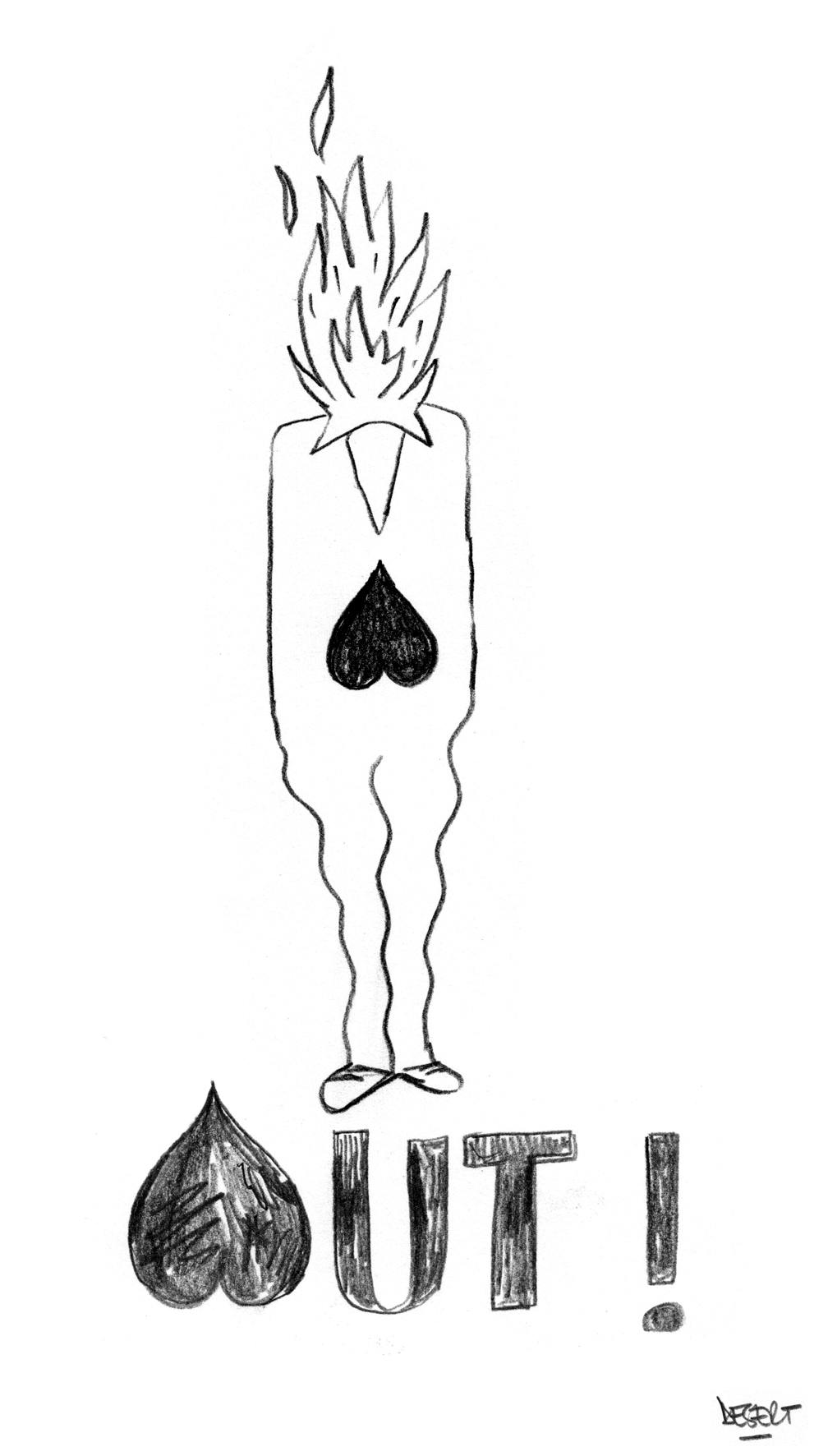
Burnout is rising worldwide. From Gallup to McKinsey, discover what the data — and the lack of it in Luxembourg — really reveals about workplace stress.
May 2025
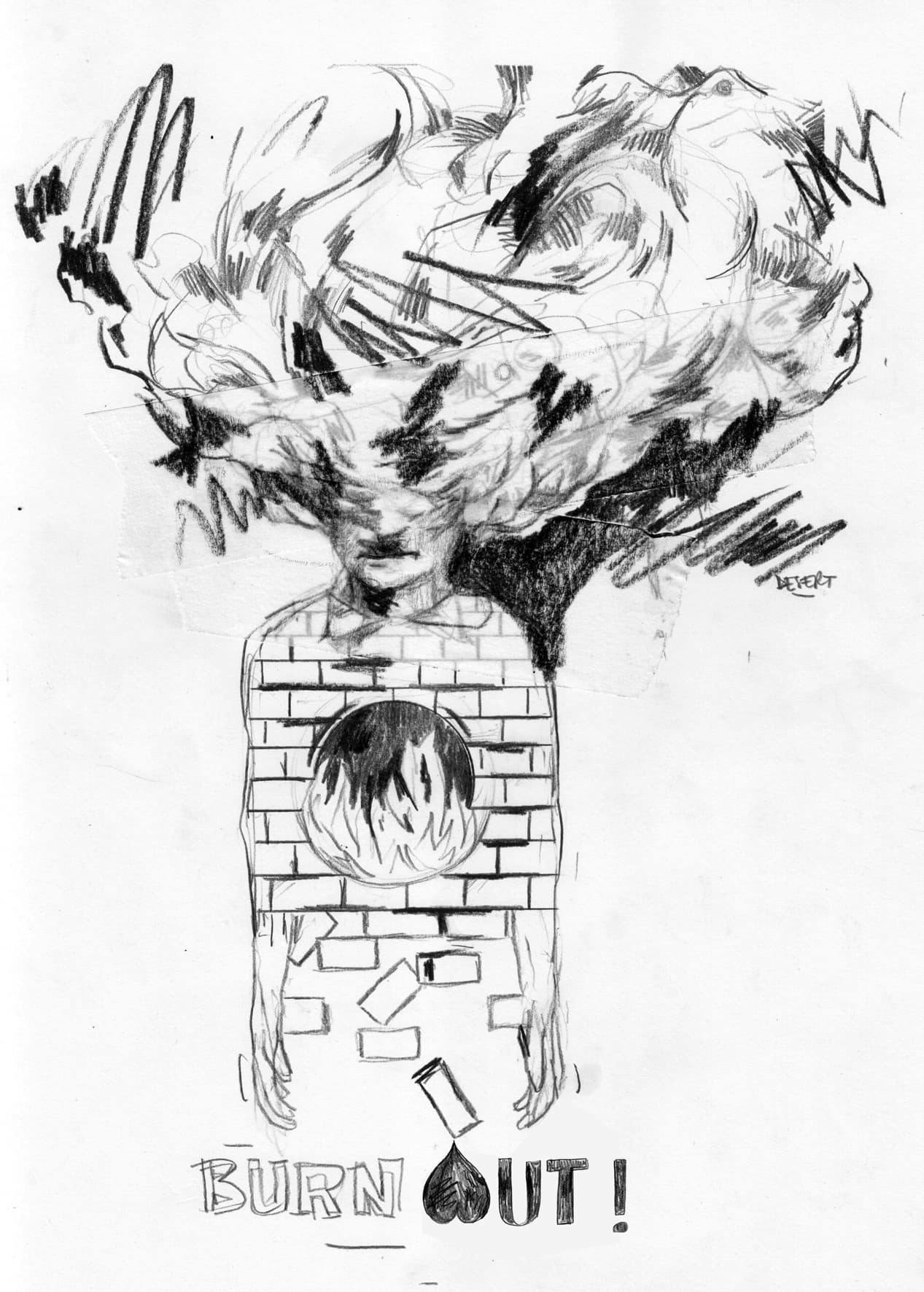
Beyond the numbers: definition of burnout, symptoms vs. boreout, and lived experiences to spot risks early and avoid collapse.
May 2025